
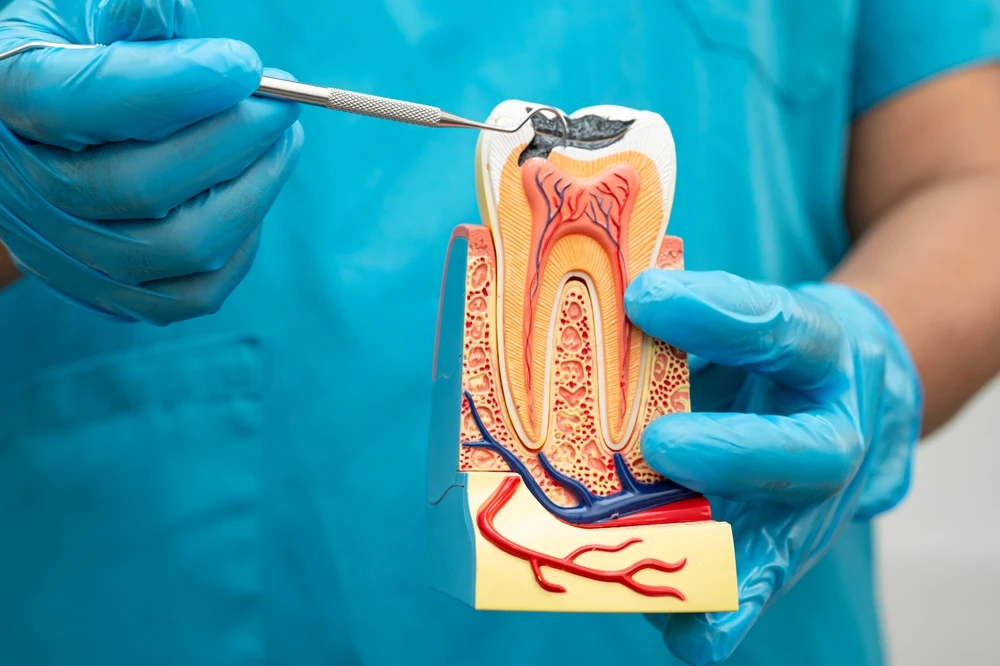
Endodontics - Root Canal Treatment
When the pulp is irreversibly affected by causes such as advanced tooth decay or trauma, it often needs to be removed from the root canals. The canals are then shaped and filled.
Root canal treatment can be completed in a single appointment, after which an appropriate temporary filling is placed. At the next appointment, the tooth is restored with a filling, onlay, or crown, as appropriate. In some cases, however, after the remaining pulp tissue has been removed, medication may be placed inside the canals and left there for a period of time to allow the tissues to heal. Additional appointments may be necessary to replace the medication. In such cases, completion of the root canal treatment may take several appointments.
Pulp Amputation
In some cases where the pulp is affected, it is not necessary to remove the pulp throughout the root canals. Instead, only the portion of the pulp within the pulp chamber, up to the canal entrances, is removed and the chamber is then filled. This minimally invasive approach was largely abandoned for a period of time but has regained a place in modern dentistry thanks to advances in dental materials and scientific research.