
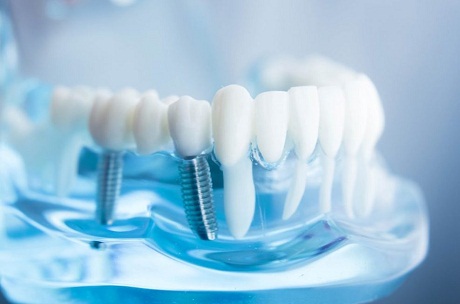
What Is a Dental Implant?
A dental implant is an artificial root placed into the jawbone to replace the root of a natural tooth. Today, implants are typically made of titanium and have a screw-like shape. Because titanium is biocompatible, bone cells grow around the implant surface and create a strong foundation. A porcelain tooth placed on this foundation provides an appearance and function very similar to a natural tooth.
Who Can Have Dental Implants?
Dental implants can be safely used in different types of tooth loss:
- For a single missing tooth: An implant is placed only in the missing tooth area without touching the neighboring teeth.
- For multiple missing teeth: Implant-supported fixed bridges can be made without damaging the natural teeth.
- For complete tooth loss: Instead of removable dentures, fixed teeth that do not move can be supported by implants.
Almost anyone in suitable general health can be evaluated for implant treatment. If the bone volume is insufficient, additional procedures such as bone grafting may be used to create a suitable foundation.
How Does the Treatment Process Work?
Implant treatment is planned in several stages depending on the condition of the tooth and surrounding tissues:
- The bone structure is evaluated through examination and imaging.
- The implant is placed in the appropriate area; no pain is felt during the procedure.
- If conditions are suitable, a temporary tooth may be placed on the same day.
- Once the implant has integrated with the bone, the permanent tooth is made.
Approximately 3 months is usually sufficient before placing the permanent tooth; in some special cases, this period may extend to 6–8 months. During this time, you can comfortably continue your daily life with temporary teeth.
Is There Pain After Implant Treatment?
No pain is felt during the procedure. After the procedure, taking a painkiller before the numbness wears off helps most patients have a comfortable recovery; many patients do not even need pain medication the following day.
What Determines the Lifespan of an Implant?
The longevity of an implant largely depends on two factors: proper treatment and regular care. Most implant losses are related to infection or incorrect calculation of the forces placed on the implant. Therefore, having the procedure performed by an experienced dentist and maintaining good oral hygiene can help keep the implant healthy for many years.
In Summary
A dental implant is one of the most permanent solutions for replacing a missing tooth from the root up while providing an appearance very close to that of a natural tooth. The most suitable treatment option for you is planned individually after examination and evaluation. If you have missing teeth, scheduling an examination is a good first step toward learning about your treatment options.